
The silence of companies generates... loss of competitiveness
Few engaging narratives and only thought about short-term economic logic.So companies (and managers) stop innovating and push young talents away.
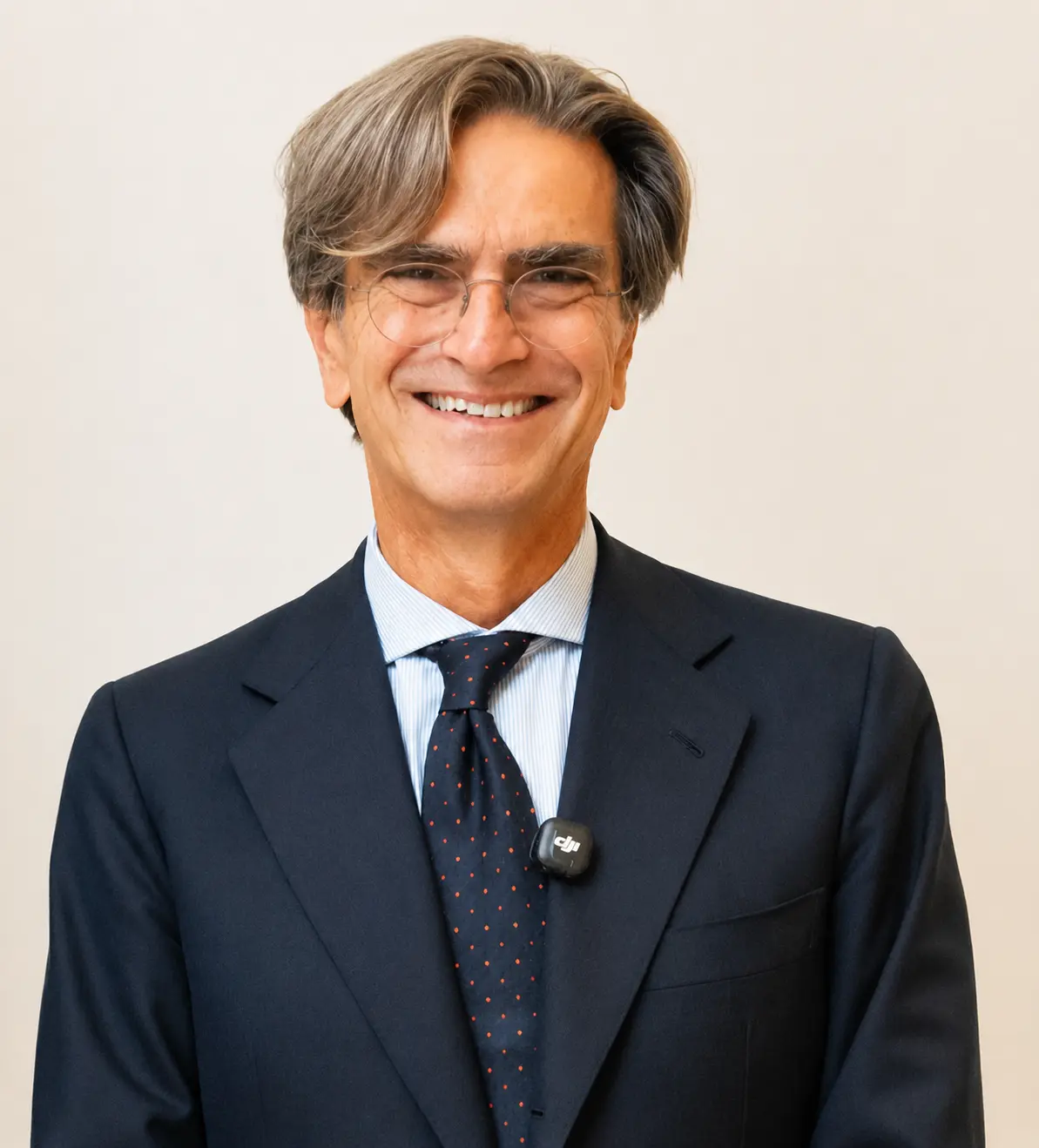
By Pier Luigi Celli, President of Sensemakers
It is impressive how today, in our country, memorable business stories struggle to come to life and last. Something that fuels stories in which events, subjects, successes and hardships are able to involve the imagination and emotions of audiences that go beyond the narrow confines of the organizational chart. At most we have 'cases' of modest stability over time, which experience fluctuating successes and often end up finding value in the arms of foreign properties.
All visibility is thus lost of that fabric of relationships, efforts, intuitions, risks, alliances and betrayals that would have allowed, and not only the employees involved, to identify, to aspire or envy, to position themselves, in short, finding themselves involved in a story ready to come to life, to then be passed down in a shared narrative.
The fact is that to have a story you need to have time to build it, have put credible characters in place, cultivate a passion to guide them and then have the words to say it. Stories require time and passion. While companies compress time, they economize it, burning it in the short term in ever shorter cycles. Aseptically indifferent. And passions, then, not finding their legitimized space within corporate mechanisms, as happens with emotions and feelings, condemn organizational dynamics to an emotional illiteracy which in the long run also mortifies thought.
The non-language of the company
This is how business, in Italy, today seems to have lost its own language and, with this, also the capacity for an understandable language, capable of connecting and exchanging immaterial resources in the multiple worlds - individual, collective - that it crosses. A language is above all a world of relationships, always looking for someone to talk to: you cannot practice it 'with meaning' if you don't have things to say and, at the same time, a wealth of meanings that are worth listening to.
When thoughts and words are restricted and run only within a given circle of recognition, bound by standard modes of expression, oversimplified slang codes and a type of mechanical communication are produced, where words lose their nuances, quickly becoming superfluous.
This is how the language of financial statements was born, the linguistic 'lego' of budgets and quarterly reports, the arid mythology of the business plan, where thought is precluded from any avenue of access, even secondary ones, and the specific identity of the company is handed over to the quantitative interpretation of the number. Forgetting that, however refined, the precision of the number will never reach the zero degree of 'approximately'.
The aphasia of strategic plans, degraded to programming models based on objectives without horizons of purpose and broader meanings, generates a silence that 'no longer says'. But it is precisely because it is deprived of a thinking thought, capable of knowing how to communicate, that the company, having no more things to say, quickly becomes incapable of saying anything. Imagine posing the problem of having a story that deserves to be exposed and can travel through time in a narrative that celebrates its glories and culture. Cultivating the art of detachment from interests not pertinent to thecore businessand experienced as marginal, if not downright compromising, the 'non-language' of the company pushes towards a retreat that smacks of reflux. And this just as the world outside its perimeter becomes complex, in constant movement, full of unexpected events and opportunities that often change the very playing field of business.
The business that doesn't tellPoor myths and talents on the run
The misunderstanding of a changing world is also given by the lack of words to read the variables of a disordered fabric that is no longer made up only of processes, procedures and instrumental rationality. We cannot expect to use codes of managerial jargon, which are less and less capable of interpreting the maps of unknown territories, using tools of a rusty trade. The indolence of certain company retreats from the social arena, then, is often equal only to the greed to appropriate spurious resources from more or less compromising sources. Which is counterbalanced, moreover, by an unjustified pride, elevated to carefully protecting a distinction that would like to mark the difference, without managing to mask the impotence.
The newspaper then, less demanding in its references, becomes a horizon that guarantees custom, guides choices and lowers the demands of even those who would be inclined to force. Thus reducing the risks of embarking on a possible story to the more modest choice of a routine that is expressed in the current news.
In this case, in fact, the availability of words and discourses is overcome by an over-codification of behavioral models and forms of communication, which allows the company to enable its managers to navigate which does not involve exposing themselves outside the accepted canons or getting dirty with visionary vagueness.
This is how generations of specialists develop who are attentive to overseeing the CV and asserting their position, rather than responsibly playing the part of creators of chapters of stories that capture, in which careers, colleagues and projects coexist.
Skilled ordinary surgeons, almost always, but reluctant to spoil the statistics and, woe betide the world, to risk questioning the illiteracy of certain hierarchies. Without realizing a risky contradiction, where ambitious campaigns are pursued for the recruitment of so-called talents, which highlights a real lack of sensitivity.
For their culture, the expectations of the new quality generation today lead them to look for business stories to espouse even before a salary or a role to fill. Otherwise, they prefer to emigrate.
In the end, our businesses thus appear to be the chosen terrain for poor but tenacious myths: they do not excite the imagination, they produce repetition, they protect a well-established mediocrity and, when the times require it, they invent their own 'storytelling' to replace reality, to be possibly exhibited on television.
The company, as a civil entity and social organism, is today almost silent. Withdrawn to safeguard a logic of interests, without great virtues, it capitalizes on the general void, but does not offer contributions. And it legitimizes (unknowingly?) a space in which replicants abound at the expense of free spirits.
We increase your company's long-term value
Discover our consulting services