
Business consultancy is an art. Enrich your vision to grow
Welcoming consumer stimuli. Investing in technology, processes and product development.And enter the largest destination markets with factories. This is how you stay competitive.Face to face with one of the most expert consultants, who has been supporting those who do business for 40 years.
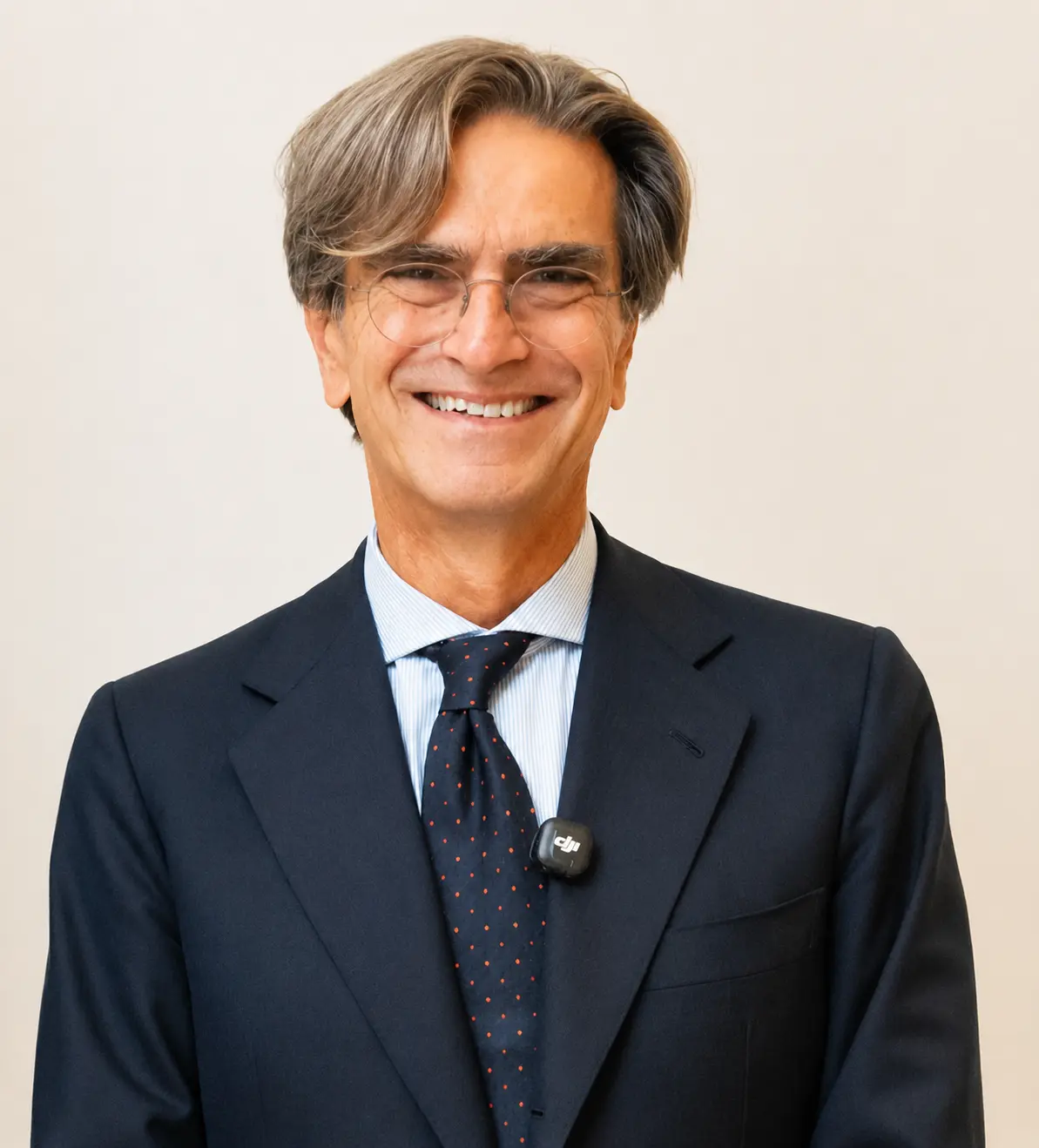
He is one of the world's leading experts in the agro-industrial and consumer goods sectors: working side by side with hundreds of entrepreneurs he has developed a sensitivity, experience and completeness of vision that is rare to find inmajorof consultancy, essentially, generalist.Luigi Consiglio, Founder of Eccellenze d'Impresa (EDI), is firmly convinced that only innovation and internationalization are the drivers of growth for every company and looks at the world of corporations - often paralyzed by processes - with a lot of skepticism regarding the ability to create value.
It's a cold morning in early December whenSystems&Enterpriseis welcomed at the EDI headquarters: we are in via Durini in Milan, a few steps from Piazza San Babila already decorated for Christmas. It is in the offices of the consultancy company, which takes its name from the award created in 2014 and which saw over 2000 excellent companies nominated, that we are hosted by Consiglio, who defines his profession as follows:"We help companies grow and make money; it's a job we love and which gives us a lot."Meanwhile, as we sit down, he adds:“EDI is a strategy and implementation boutique in which we adapt global cultural and managerial themes to the specifics of Italian entrepreneurship”.
It is the prelude to a long chat in which the consultant merges with the entrepreneur and interprets the complexities faced by those who have to lead a company, focusing attention on those entrepreneurial skills which in themselves represent a competitive advantage. From here arise (some) guiding principles to be transferred to the entrepreneurs extensively covered in the bookItalian championswritten by Consiglio and published by Mind editions:“The entrepreneur can never be satisfied. He can't afford to look back. He must always be vigilant and in search of the new, the challenge, the creative madness capable of breaking the habit and radically renewing his company. The artisan matrix and the product and process expertise make the Italian company unbeatable on international markets”.
The twenty-year collaboration withMarco Fortis, confirmed in the Council's move to EDI, confirms this intuition with the numbers of the Edison foundation. Speed in development, family leadership, internationalisation, organizational streamlinedness, widespread entrepreneurship and the ability to listen to all components of the company are the distinctive factors of the specific nature of the Italian company.
Companies likeRana, Molino Casillo, Valdo, AsdoMar, Caffè Borbone, to name a few, are the cases from which the experience and culture of EDI andtestify to the goodness of the model and the ability to push client companies beyond the boundaries of their comfort zones. Among the missions of the Consiglio company there is also a social aspect:the consultancy company helps young people enter the world of work and, for some time, has focused above all on female entrepreneurship.
In this regard, the latest success, which has had a certain notoriety, concerns the support of the five young entrepreneurs ofMariscadorasof Rimini who turned to EDI for some guidance and suggestions regarding theblue crab business:an invasive alien species not fished in Italy which, however, has a very strong demand and very high prices in the USA.With the help of the consultancy firm,the five entrepreneurs managed to contact buyers interested in buying all the crab produced; involving navies and transformers in the network enterprise,Blueat has entered into a supply chain agreement to keep the purchase price of the crab fixed,committing to collecting all the catch, in any quantity and at any time, also because the quality of the Italian product is better than that of Mexico and the Far East. “The demand was there, we built the offer and a particularly thriving and sustainable business started”, comments Consiglio. The chat starts from here.
What are the featuresto consider when evaluating a company?
The short answer is: the ability to generate cash in the long term and therefore the progression in the value of the shares. But it must be understood what the reason for this generation of value is. The sources of the uniqueness of the offer, its defensibility, scalability and consistency with the current and prospective demand of the target markets. Strong research and development, product expertise spread across all levels of the organization and a strong focus on serving the customer are the ingredients capable of generating value in the long term. To this it must add an ability to attract talent consistent with the company's values and the methodology to integrate them with the company culture and expert people. A continuous progression of overall growth, in short.
Why do you think there is a need for this constant self-analysis on the part of those who lead the company?
Nokia, Motorola, Seat Pagine Gialle, Fiat, Lancia, Alfa Romeo, Maserati, Benetton - I'll finish the list which could go on for pages - they are all companies that didn't "see it coming". They were companies that rested on their laurels, focused on power and finance. That's not how success stories happen. The entrepreneur must be vigilant and continually look at the coherence between his business mix and the especially prospective needs of customers. I know many like that. And they are the heritage of Italy. They are unique in the world and derive from the artisanal expertise that our country is full of. We are children of Stradivari and the Florentine bankers, we are not children of finance, speculation and industrial giants. This product expertise allows you to carry out a continuous analysis of the scenario and the competitive position of your products and to continuously increase the perceived competitive advantage. Business processes must be made consistent with market needs at any cost. This continuous innovation fuels the uniqueness of the company and constantly increases its value.
How to understand if you are biddinga commodity or a productpremium?
If the product manages to enter the process and improve it, it is not a commodity, it is an ingredient. If a consumer product manages to become indispensable, and solve a consumer need, then it is not a commodity. If a product manages to give those who buy it a special image, then it is not a commodity. There can be more than 10 Ebitda points of difference between a raw material and an ingredient consistent with an industrial process (4.5% versus 15.5%). Therefore it is worth working on the significant differentiations of your offer. Continuous scouting of opportunities is the key to success for the company. Having widespread entrepreneurship and the ability to listen to all the precious information that comes back from customers is an absolute asset of world champion companies.
In these terms it seems like everythingvery simple…
I'm afraid it's simpler than you think. Of course, a curious and enterprising nature of leaders is fundamental. It is essential not to be afraid to take risks. Engaging leadership that can inspire is important. And a lot, a lot of passion for the product. Companies are guided by research and development, not by finance and human resources. The latter must follow and be of service. I know I'm being disrespectful in saying this, but I have almost 500 cases under my belt and I hope I can be forgiven for some rude behavior.
How can the entrepreneur give valueto the company alone?
It must build a company in which every link of the organization is manned by those with an entrepreneurial attitude. The leader has the role of showing the way and thinking about innovation; to do so it must have involved trusted people capable of doing their part. For example: those who deal with logistics must not simply call a truck, load it and watch it go away... they must ask themselves which is the most efficient model to be able to achieve the objective at the lowest cost and with a higher level of service, even proposing to change the company's business model. Big changes can be made by simply looking at your business from a different angle. For example theturnaroundmade by Walmart - the largest large-scale retail trade (GDO) chain in the world - in just over a year is paradigmatic and shows how everything is possible, even in very large business organizations or as large as 2 million workers as Walmart is. The largest retailer in the world has changed its perception by moving from a destination supermarket to a logistics platform competing with Amazon that attacked it. 90% of Americans live within 10 miles of a Walmart supermarket. If I receive an online order I can process it from the supermarket in less than an hour, I use the store employees at the end of the shift by giving them overtime and I beat the competitor on the level of service and breadth of the available range. All large-scale distribution companies have the same problem: they are crushed between online and discount. But how many of them are reacting strategically by exploiting their strengths?
What advice can we give to those who do business to change their vision?
Must have the ability to see externally. It must look at its business from a different angle and reimagine it. It is a process that must never stop. Traveling, looking at the competition, understanding customers, listening to their objections, studying startup innovations, understanding process technologies, fueling curiosity in your collaborators, rewarding innovative ideas, never punishing a wrong proposal or an error, motivating the creative energy of everyone within your company. Don't be afraid to change everything, even destroy an already approved plan, or give up on an investment that doesn't pan out as you thought. The work of the entrepreneur, in the product development process developed at Harvard with Marco Iansiti, is defined as that of the injector in an engine. It is the element that continually sets fire to dust, an arsonist that pushes. Success, in 90% of cases, comes from there.
The recent crises were not enoughas teaching?
I count at least four recent shocks that have had psychological and economic repercussions on businesses. We started with Covid, then continued with the scarcity of raw materials as a consequence of the pandemic emergency and China's choice to purchase stocks in volumes four times greater than in the past precisely to protect itself, but creating ashortageof raw materials. Then there was the war in Ukraine and finally the infection. Uncertainty has become the 'rule of the game' and has forced us to take account of our strategies. The crises did not generate an immediate recession, rather they contributed to the shift in consumption in the direction I anticipated before, that is, towards products that have an adequate level of value compared to the price. Whoever managed to foresee all this put themselves in a position of safety and generated value (and continues to do so); the others stopped. Despite the crises, however, demand continued to drive impetuously. The world has had a desire to live and spend precisely because of the crises, but spending is becoming much more selective.
Which companies have the mostsuffered these crises?
Who looked at the world as if nothing had changed, because in any case the company was continuing to make money. This is the case of the Automotive industry which did not evaluate the arrival of the electric motor in time, which has paralyzed various companies today. But it also applies to the eBike sector: there was an increase in the market in the short term, but the producers did not ask themselves what they would do with their bicycles once the market was saturated and so they found their warehouses full and risked default. I can understand that small companies, focused on the product, are overwhelmed by large geopolitical phenomena, but large companies that have not noticed the upheavals in the market are unjustifiable, especially those that can, precisely because of their size, even direct the economic development policies of a country, if not of an entire continent, I justify them less, much less. Luxury and Automotive have missed a great opportunity to rethink their development models and I don't understand why.
Because he believes it is the SMEsto win the competition with the big teams?
Large businesses focus on efficient and repetitive processes. They work on overall profitability and carefully avoid risk. Innovating is risky by definition. Better to cut costs, reduce quality or quantity and bring in nice short-term profits. In this way, however, value is not built and a future of growth and satisfaction is not prepared. Only entrepreneurial companies have the independence and propensity for risk that allows them to invest beyond economic logic. Spend on projects that will have a return beyond three or even five years. It is mainly a cultural issue. But in the fight between David and Goliath I have never seen the latter win.
Can you give us an example?
About ten years ago, the yogurt market in the USA was at a standstill. Until a young 29-year-old Turk, Hamdi Ulukaya, took over a factory from Kraft - it is said that he repainted it together with his wife - and with a loan of around 1 million dollars launched Greek yogurt in New York under the Chobani brand: the winning idea was not to limit distribution in places frequented by Greek Americans, but to offer the product to large-scale retail trade. Today Greek yogurt has a 40% market share in the USA. Yoplait, Danone, General Mills watched and then followed. Kind did the same with dried fruit bars or Sabra with hummus, and Kevin with proteinsreadytoeat. In short, all innovation in US food comes from small-to-medium sized companies. So my thesis has a fairly robust proof. And the same consideration applies to Europe.
But in Italy the business is often slowed downfrom the generational transition: what do you think
I consider the generational transition to be a wrong expression: there must not be a transition, but a synergy between generations who are called to hold hands. Seniors bring experience and young people energy: together they produce enthusiasm and the ability to connect. D&I is also this: integrating populations whose age is distant in fertile exchange paths. This also applies to managing the company. Normally a healthy company has many more projects than human and financial resources. If we were able to set aside for a moment the theme of power, that is, who is in charge, we would be able to see the enterprise as a cluster of opportunities: everyone can and must take a baton and run towards a goal. The generational transition refers to power, but this is not what creates value, rather it is thanks to the creative energy and spirit of the organization that is fueled by everyone.
He talks about "entrepreneurial anguish" whichmust spread throughout the company: whatyou mean?
I was lucky enough to be close to many great entrepreneurs. Extraordinary men. The common trait is never being satisfied, never satisfied with the result achieved: before making a decision the entrepreneur consults the world; is objectively worried; takes a high risk, does not know the outcome; it's pure adrenaline. But when the entrepreneur makes the decision he becomes cold and calm. From that moment on it is only serenity and reassurance. Living like this is like living 100 lives. It feels like you never sleep, but the feeling is that you are building something destined to stay. The feeling is of making history.
Many Made in Italy companies focus on history to position their products; do you think it's a good strategy?
Tradition is a great marketing platform. Italian companies have an advantage thanks to the Made in Italy megabrand, but it is only a starting point. The adaptation of the product to the precise needs of the markets, the construction of factories close to the places of consumption, the entry into local supply chains, make the companies truly international: entrepreneurial companies of the Italian tradition, but international in their offer and culture. I would buy the shares immediately.
What are the skillswhat should those who do business have?
He must have the ability to look and listen: with an open mind he must listen to what the world tells him, to understand how his technologies and skills can best respond. And the more he listens with a clear mind, the better his long-term strategy will be. Furthermore, he will need to surround himself with people who are as different as possible from each other: this aspect is fundamental and concerns the importance of diversity and inclusion within the strategic process; Having these ingredients enriches you with stimuli. It may be that the impression is that of dealing with people who waste time, but in the end their contributions will prove to be the most important for fertilizing thought. It is easy to work with a perfectly close-knit team, but this does not necessarily lead to an increase in the value of the company over time. The key is to imagine new levels of service and increase creativity; to do this you need to have different people close to you to have enriching stimuli. The risk, otherwise, is to wallow in one's own thoughts.
What is the role of the consultantin this scenario?
The consultant must inspire the entrepreneur. Unfortunately, the idea linked to individual projects has spread in consultancy: an analysis is carried out and a summary document is delivered. But our job is completely different: it is sitting together with the entrepreneur and waiting for the right moment to tell his thoughts on the vision of the company. The consultant must add an external vision capable of enriching that of the entrepreneur. He must play the role of the 'contrary', who says uncomfortable things and does not fall into the temptation to please the company head's strategy, because only in this way can growth be stimulated.
And doing so is an art.
We increase your company's long-term value
Discover our consulting services