
Brand con l’anima
The meaning of a brand is no longer just in the hands of the company, but is built with consumers.It is an identity signal.
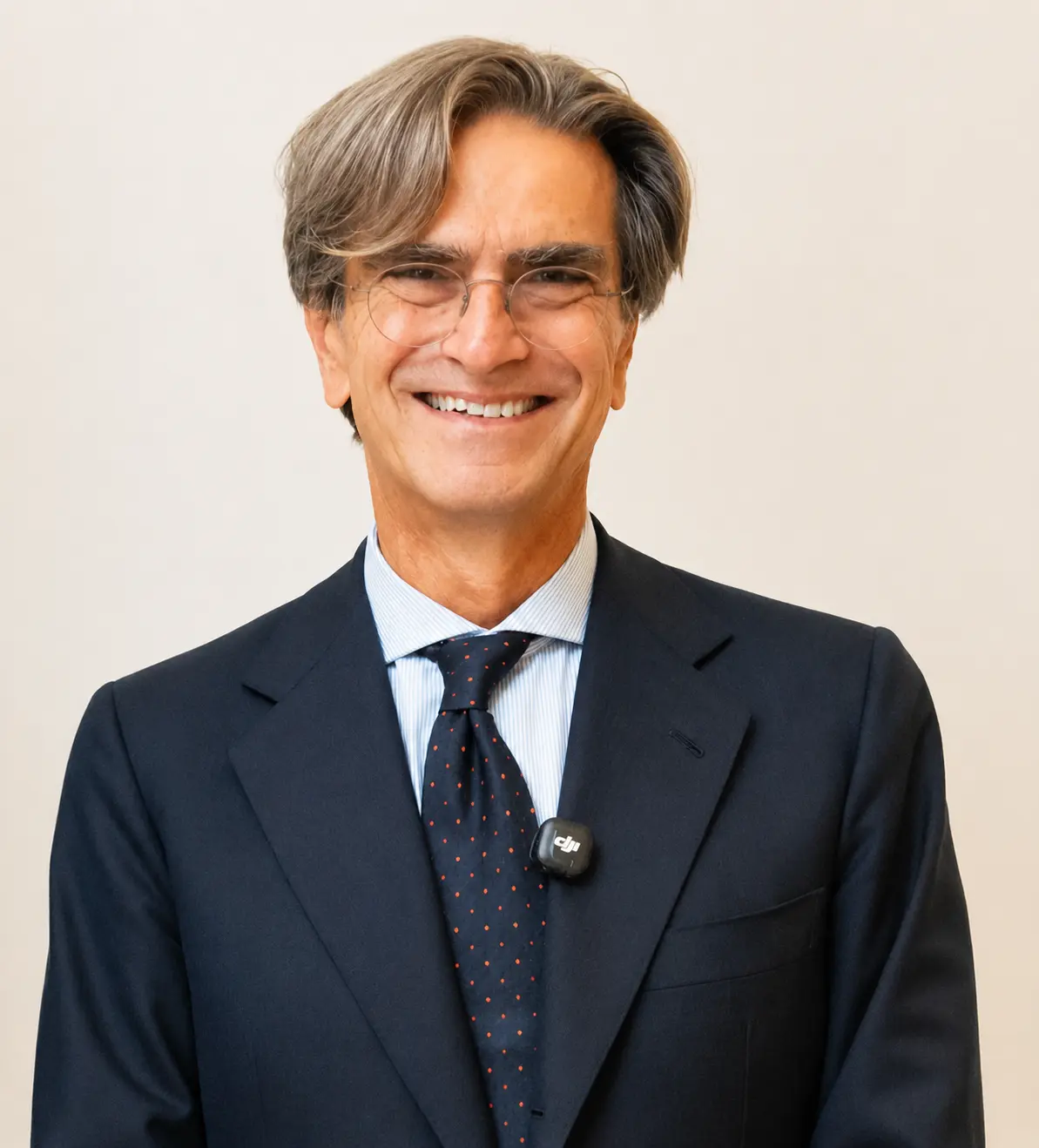
Marcus Collins, Assistant Professor of Marketing at the Stephen M. Ross School of Business at the University of Michigan.
Published in issue 2, March/April 2025 – Mit Sloan Management Review Italy.
The image and meaning that a brand transmits have never been entirely under the control of the owner, but have always been in dialogue with the surrounding world. While marketers painstakingly craft creative messages and campaigns to attract target customers, it is customers who create meaning and, consequently, shape a brand's reputation. In the age of social media, this meaning has become increasingly fraught with cultural and political implications, not only for the image of the brand, but also for the identity and reputation of customers themselves. This new mediated discourse between consumers and brands has created new challenges for contemporary brand managers, who must not limit themselves to managing the communication and intellectual property of a brand, but must also manage its meaning, as it is the consumers themselves who shape the meaning of the brand in relation to their own identity.
Historically, brands have been used as an indicator of quality and as a basis of differentiation to aid consumption decisions. Traders used to mark their products with trademarks to distinguish them from similar products offered by others: the origin of the brand. In the 19th century, European governments provided a clear path for businesses to legally secure their brands and fight imitators. In 1876, the British brewery Bass & Company was the first company to register its brand to make it a "legal brand" protected by law; Coca-Cola would follow nine years later. This was the first evolution of the brand, from “factory brand” to “legal brand”. Recognizing the provenance of products marked with a particular legal brand, consumers began to use these brands as a quality guide to aid the product selection process. This inspired companies to use suggestive selling techniques to help consumers choose their brands over those of their competitors, what we now call brand advertising. For much of the 20th century, the goal of branding was no longer to assert ownership; instead, marketers strove to establish an identifier that assured consumers that the product was trustworthy. In 1909, the magazineGood Housekeepingunderlined this objective when it began to position itself as a reliable guide to the quality of other brands, giving its seal of approval to tested products. In this way, the brand transformed from a legal brand to a trusted brand, a mechanism that reduced uncertainty for consumers. You know the English saying: “No one has ever been fired for buying IBM”? This is the advantage of the brand as a trusted brand.
From product quality to personal image
The era of the brand as a trusted brand was focused on identification and functionality. However, in the 1980s, an expanding economy inspired a rise in conspicuous consumption, in which materialism, luxury and the visible display of wealth were prioritized over product performance. In this decade theyuppies, young urban professionals who valued status symbols as indicators of their highly remunerative careers, in stark contrast to their predecessors, thehippiesand ibeatnik, who shied away from conspicuous consumption. This cultural shift has led to increased sales of high-end cars, such as BMWs, and increased the profile and desirability of designer fashion brands, such as Gucci, and luxury watches, such as Rolex.
This period has witnessed the most marked change in brand marketing: from product promises to the meaning of lifestyles. Campaigns like Gray Poupon's “Pardon me” and American Express' “Don't leave home without it” presented products as artifacts of prestige, not simply providers of functionality. Apple's famous "1984" commercial didn't even show its new Macintosh computer, but instead communicated the ideals of nonconformity as a signifier of rebellion. This change took brands beyond the functional aspect to move on to the emotional one which, thanks to the research of marketing experts Les Binet and Peter Field, we now know to be more effective. It wasn't enough to be recognized or trusted. Marketers wanted their brands to be loved: to evoke stronger emotions in consumers and to drive more people to buy. This evolution has transformed the brand from a trusted brand to one that Kevin Roberts,exCEO of the Saatchi & Saatchi advertising agency, he defined “love brands” in his 2004 book of the same name. Marketing managers were not just looking for a sale, but a relationship, encouraging consumers to develop deep and positive feelings towards their chosen brands, aiming for lasting loyalty and even irrational and emotion-driven consumption.
Our brands, their identities
In today's hyper-connected world, social networking platforms have become our primary means of learning about events and keeping track of our social groups. These contemporary squares serve as a public forum where people can discuss social issues and negotiate consumption decisions. In fact, someone's opinion on a political issue can be quickly followed by a post about their new purchase in our newsfeeds. The two things have become intertwined to such an extent that the choice of a brand can often be considered as a vote expressed on a social issue. The choice to eat at Chick-fil-A can be a sign of disapproval of LGBTQ+ rights; Purchasing spices from Penzeys may indicate support for a progressive political agenda. These associations are built and publicly controlled through the same channels through which people curate their identities, such as Instagram, Facebook and TikTok. The result of this dynamic is that today the most powerful and sought-after brands have been identified as the brands that most accurately represent a consumer's cultural identity. These brands have evolved from love brands to identity brands that people use to communicate to the world who they are and which cultural communities they belong to.
Brands have leveraged this shift to establish stronger connections with consumers and court potential buyers who subscribe to similar cultural views. Dove, which challenges traditional beauty standards with its “Real Beauty” campaign, and Always, which combats gender stereotypes with its “#LikeAGirl” campaign, are both examples of brands that have identified a point of view beyond their product categories as a way to project ideological meaning and appeal to like-minded consumers. This symbiotic relationship has increased consumer expectations of brands. It is no longer enough to trust in the good performance of the product or in the fact that customers are emotionally attached to the brand; today, this 'love' is conditional. Consumers want to know where the brand stands on social issues; they want it to take sides to ensure that their consumption is congruent with their self-representation. Yesterday's most sought-after brands were loved for what they did for us: they signaled status. Today the most coveted brands say something about us: they signal an identity and we expect congruence between our identity and our consumption.
This expectation has caused problems for some brands, whose consumer base is representative of different cultural points of view. For example, Bud Light found itself in the crossfire of the culture wars after its partnership with a transgender TikTok influencer resulted in a boycott by conservative consumers. To defuse the situation, the company released a statement in which it sought to dissociate itself from any affiliation with social issues and to present itself as a beer for everyone. Unfortunately for the brand, this alienated progressive consumers and ultimately led to a sales slump that relegated the historic number one beer brand in the US to number three.
As social actors within our collective social groups, we curate the presentation of ourselves to control and manage our public image and we act based on how we see ourselves and how we want to be seen by others. Therefore, we adopt costumes that match the role we choose to play, just as bankers wear suits and construction workers wear Carhartts. The brands we adorn ourselves with serve as identity badges to dress our social personas based on the meaning we have collectively assigned to those brands.
When people who adhere to the same culture act in concert in an attempt to promote social solidarity among the group, it is called collective effervescence, a term coined by sociologist Emil Durkheim. It is the influence of 'my people' that makes identity brands so powerful. And when our people take action, it catalyzes a network effect and we consume in concert, not because of the product but because of who we are. Identity influences what we buy, where we go, how we present ourselves to the world, and who we choose to gather with. Considering the prolific nature of identity projection across our social networks, brands have become increasingly critical as a strategy for managing our reputation.
What does it mean for marketers that branding, once a way to convey the real and abstract attributes of a product, is now a signal of identity that must align – or not – with a certain audience? Those who still see the primary role of the brand as a catalyst of emotions must recognize that, in today's social landscape, these emotions are culturally mediated based on the ideologies to which consumers adhere. Brands must evoke emotion not only to push consumers to make a purchase, but also to signal what their consumer communities support and, often, to communicate their position on a controversial topic. The public and pervasive nature of consumption through social media and its subsequent influence make this era of brand identity more challenging for marketers and, at the same time, potentially more rewarding.
Today's marketers must be intimately aware of the changing cultural zeitgeist and courageous enough to intervene in the conversation; standing on the sidelines or not reading the moment can erode a brand's relevance. Once upon a time, Nike was a company that had a clear ideology and engaged in cultural conversations based on its brand voice. Whether it was challenging people to 'find their greatness' or to 'dream wildly' – a campaign that featured quarterback Colin Kaepernick – Nike became more than a beloved brand that made sneakers; it was a brand of identity for people who saw the world similarly. Indeed, when Nike launched the “Dream Crazy” commercial, factions of Nike consumers who disagreed with Kaepernick's political position used their social networks to openly demonstrate their disapproval of the partnership by burning their Nike sneakers. Meanwhile, those who agreed with Kaepernick's on-court protest purchased more sneakers.
But Nike's attempt to relaunch its brand marketing for the Paris Olympics, after what seemed like years of silence from the company, highlights the dynamism of culture and how even the best can miss the mark. In the “Winning is not for everyone” campaign, Nike's point of view seemed out of tune with the culture of the contemporary athlete. Instead of speaking to the positive, celebratory love of sport and sportsmanship that the Olympics evoke, the commercial's narrative casts athletic commitment in nihilistic terms: "I have no empathy. I don't respect you. I have an obsession with power. I think I'm better than everyone else. I have no regrets. I have no sense of compassion. What's mine is mine. I want to take what's yours and never give it back." In a world where NBA players exchange jerseys with their opponents after a game to express their shared admiration for each other, and where a Lao sprinter assisted a South Sudanese runner who fell during the preliminary round of the women's 100-meter race during the Games, the ad was jarring and antithetical to today's sporting culture.
To truly engage consumers in a more meaningful way, marketers will need to identify the beliefs their brands represent, beyond the products themselves, and what that means for today's consumers. Liquid Death is a brand that believes in the death of plastic use, which is why it sells water in recyclable cans. The brand's identity is driven by its ideology; it also happens to sell water. And people who see the world similarly not only consume, but also use the brand as a badge of identity, driving Liquid Death to a $1.2 billion valuation just five years after its founding. It doesn't focus on value propositions; it operates on the basis of ideology and communicates it in a way that is consistent with how its consumers create meaning.
If the brand is a sign that conveys meaning, then the brands with the most meaning – those that align with our cultural identities – will be the most powerful and successful.
We increase your company's long-term value
Discover our consulting services