
Record employment, future in crisis: the Italian demographic alarm.
The growth of mature employees penalizes young people and digitalisation.
Article published in issue 320 March / April 2025 of the magazine Sviluppo&associazione
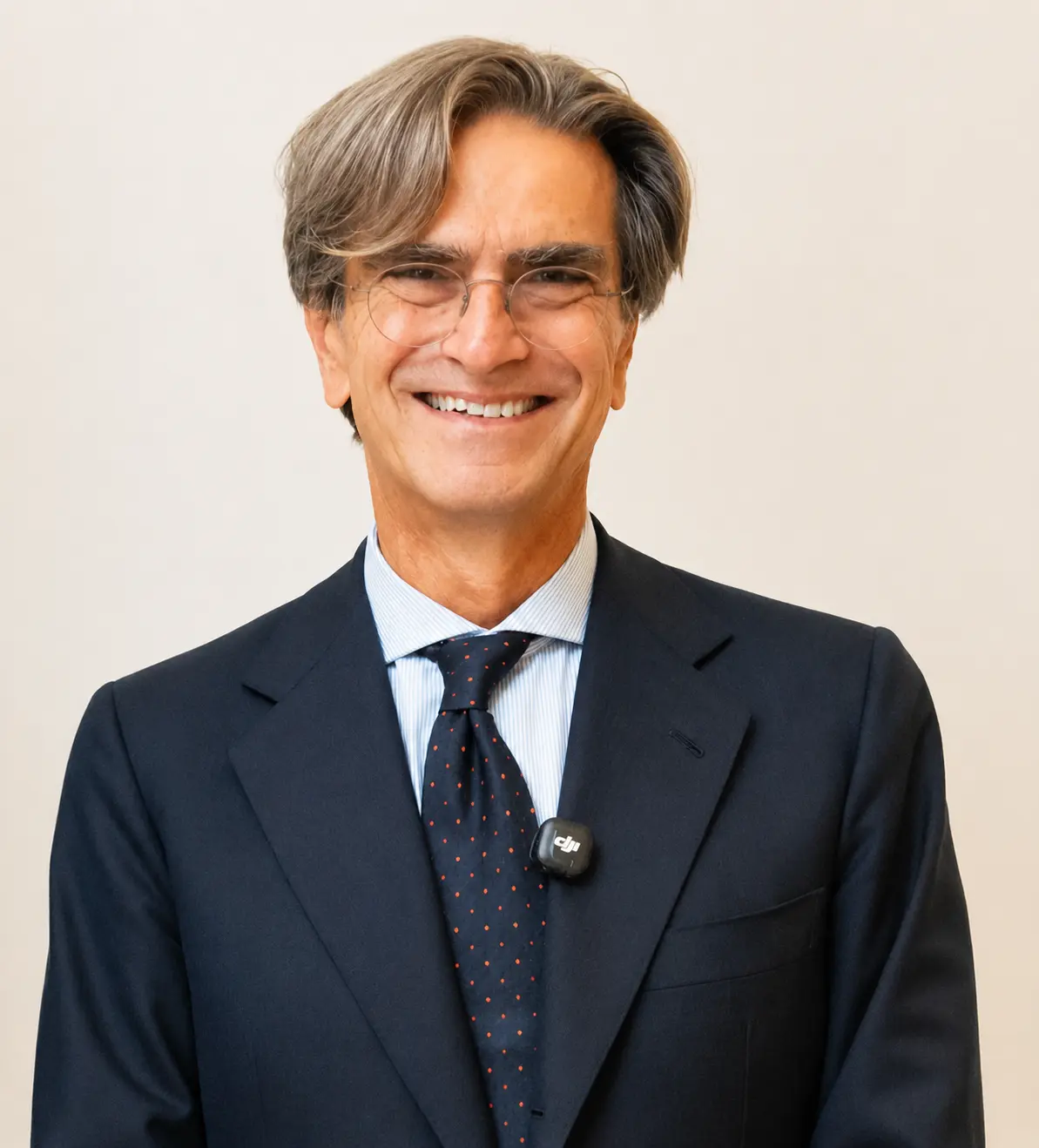
ByFrancesco Seghezzi, President of the Adapt Foundation
In recent years, the Italian labor market has recorded aemployment growthwhich, at first glance, appears extraordinary. In February 2025, employment reached an all-time high of 24.3 million. Month after month, employment data fuels a debate that focuses on minimal changes, percentages that fluctuate by a few decimal places and comparisons with the previous month. This is an important analysis, which allows us to follow the trend of a job market which, in Italy, is growing in quantities that could hardly have been imagined just a few years ago.
However, behind these apparently positive figures lies a macroscopic phenomenon, an 'elephant in the room' that continues to be ignored: thedemographic changeis redesigning the structure of the workforce,generating astructural mismatchbetween supply and demand which risks compromising the economic and social sustainability of the country in the coming decades.
Very often this mismatch is spoken of as being caused solely by young people, who are not able to correctly choose training paths, by families who do not provide guidance, by companies who do not know how to identify the correct profiles for what they need. But also lazy young people, little predisposition for mobility, low wages and little desirability of some jobs. These are reasons that can certainly be found in the literature, but in this contribution we will argue that at the origin of the mismatch, in addition to these causes, it is possible to identify a more structural one: thedemographic transformationswhich are characterizing the evolution of the Italian population in recent decades.
A demographic problem
If we observe, in fact, the demographic data, it is possible to read the age-old debate on the lack of workforce, especially young people in Italy, in a different way. In 2002, 8.155 million young people between the ages of 0 and 14 lived in Italy, in 2024 the number dropped to 7.019 million, a drop of 1.136 million units, equal to 13.5%. These are data that can help us understand how the phenomenon is growingmismatch between job supply and demandcannot be read ignoring the demographic context. In fact, due to the lower absolute number of people who will join (and already are part of, as the phenomenon is now dated) the workforce,the demand for labor will inevitably reduce,making it more complex to find the figures necessary to satisfy the supply of the productive fabric. Because of thedecrease in births in recent decades,the working age population (15-64 years) will decline inexorably in the coming years.
The projections developed by Adapt are alarming: if the employment rate remained constant, already in 2030 the number of employed people in Italy would fall by 3.2% (minus 730 thousand workers), a more critical figure than the European average (minus 0.6%). In 2040, the decline would reach 13.8% (3.1 million fewer workers) and in 2050 20.5% (4.6 million fewer). This decline will affect all age groups, but particularly the 35-49 age group (minus 10.8% in 2030, equal to almost one million fewer workers) and the 50-64 age group (minus 26.5% in 2050, over 2 million fewer units), precisely the one that is driving employment today. Even young people will not be immune: between 15 and 34 years of age, workers will increase by 0.9% in 2030, but will progressively decrease, with a reduction of 450 thousand units in 2040 and over one million in 2050.
Italy is located in onedisadvantageous position compared to the European average, with an older population and a more marked decline in births. This demographic imbalance generates a structural mismatch: companies will find themselves with ainsufficient job offerto meet demand, whilethe demand for services,such as healthcare for an increasingly elderly population,will increase, without there being enough young people to fill these roles. For example, the healthcare sector, already in crisis due to staff shortages, will see an increase in demand for assistance due to the aging of the population, but the reduction of the young workforce will make it difficult to satisfy this need. Furthermore, thedelayed retirementof the Baby Boomer generation will cause a further depletion of the workforce, not compensated by subsequent generations, smaller in number, even if with higher levels of education. Thisgenerational imbalanceno longer allows us to imagine a turnover equal to the number of people who will retire, making it necessary to rethink workforce management strategies.
An aging job market
Analysing the composition of employment growth, an impressive figure emerges: in the last year (between February 2024 and February 2025),95% of new employees(542 thousand out of 567 thousand total)belongs to the over 50 group.On the contrary, the other age groups show worrying dynamics: workers between 25 and 34 years old decrease by 10 thousand units, those between 35 and 49 years old by 17 thousand units, while only those under 25 record an increase of 52 thousand units. This trend is not a contingency, but the result of a trend that has been underway for 20 years, accelerated by the Fornero reform, which raised the retirement age to 67, keeping hundreds of thousands of people in the job market. From 2005 to today, employed people between the ages of 50 and 64 have increased by 4.2 million, while those under 50 have decreased by over 3 million. This imbalance is also evident in the type of contracts: from 2015 to the third quarter of 2024, permanent workers over 50 increased by 1.88 million, almost four times the increase recorded between 15 and 34 years (more 493 thousand), while in the 35-49 age group there was a decrease of 629 thousand units.
This dynamic is also reflected at a European level. According to a recent study by the European Central Bank (ECB), in the euro area participation in the labor market between 2021 and 2024 grew by 3.5%, driven by three categories: non-European workers (24.7%), those with tertiary education (7.9%) and, above all, older workers (9.9%). In Italy, the unemployment rate of the over 50s is significantly lower than the average (2.8% against the general 5.7% in the third quarter of 2024), and their presence has contributed to reducing the overall unemployment rate by 0.3 percentage points compared to 2021. This suggests that theaging of the workforce, combined with pension reforms, has had a positive impact on employment in the short term, but raises questions about its long-term sustainability.
Demographic change, with an average age of the resident population of 46.8 years (Istat data), and pension reforms are the main causes of this trend. However, thisunbalanced employment growthgenerates a mismatch: companies require new skills, often linked to digitalisation and innovation, but workers over 50, although experienced, may not be adequately trained for these needs. For example, sectors such as technology and the green transition require specific skills that older workers may not possess, especially if they do not have access to retraining programs. Furthermore, their permanence in the labor market is not supported by structured policies that guarantee their health, well-being and productivity.
A worrying sign is thestagnation of labor productivity: in Italy, employment growth was not accompanied by an increase in added value, and in 2023 productivity recorded a significant slowdown, with negative effects on wages and economic competitiveness. This phenomenon is partly attributable to the fact that workers over 60, while remaining in the job market, could be employed in tasks that they cannot perform with the same efficiency as in the past or that do not meet the needs of a modern economy.
The implications for the economic and social system
The mismatch between supply and demand, driven by demographic change, has profound consequences. Firstly, as we have seen, the employment growth driven by the over 50s has not translated into an increase in productivity.In Italy, added value has not grown in step with employment,leading to stagnant labor productivity, with negative effects on wages and economic competitiveness. This phenomenon is particularly worrying in a context in which the Italian economy faces global challenges, such as the digital and ecological transition, which require innovation and flexibility. Secondly, the decrease in the working population will put welfare systems under pressure, starting with social security and healthcare. With fewer workers paying contributions and an older population living longer, the sustainability of these systems is at risk. The increase in the duration of social security benefits and the volumes of healthcare benefits, combined with a declining contribution base, could lead to a collapse of welfare systems if structural reforms are not implemented.
Addressing this mismatch requires a new paradigm that combines different strategies. Firstly,it is necessary to invest in technology and automationto replace jobs that are no longer desirable and support mature workers. Artificial Intelligence and digitalisation, often viewed with fear, can become allies, as long as they are guided by public policies that guarantee their fair and controlled use. For example, automation could be used to cover repetitive or physically demanding tasks, allowing workers over 50 to focus on roles that value their experience, such as mentoring or supervision. Secondly, migratory flows represent the only solution to quantitatively increase the working age population. Immigration, both regular and irregular, can fill the gapgapdemographic, but requires integration paths that enhance the skills of migrants, aligning them with the needs of the market. For example, in sectors such as agriculture, logistics and healthcare, migrants could respond to the demand for work, but language and professional training programs are needed to ensure effective matching. Thirdly, it is necessary to reduce the distance between training and work, strengthening policies and tools (such as dual apprenticeships or Its Academy) that exist and which can help achieve greater alignment because they anticipate the moment of meeting between young people and working contexts. This may contribute to the reduction of NEETs which, although decreasing, continue to be an important number in Italy.
For workers over 50, who today drive employment,structured policies are needed: continuous training to update skills, flexible working models, measures for physical and mental wellbeing and a reflection on reducing working hours for this age group. For example, companies could introduce upskilling programs to teach mature workers the use of new technologies or adopt hybrid work models that reduce physical and mental stress. Furthermore, greater involvement of industrial relations and collective bargaining actors is crucial, to adapt solutions to the specificities of each sector. In the long term, it will be necessary to rethink the organization of work and production processes, also considering a further lengthening of work paths, but only in the face of changes that guarantee their sustainability. For example, one could imagine a gradual retirement system, in which workers over 60 progressively reduce their working hours, maintaining an active but less intense role.
Another aspect to consider is the need forpolicies that encourage birth rates,to rebalance the demographic structure in the long term. Subsidies, parental leave and childcare support could encourage families to have more children, but these are measures whose effects will only be seen in decades. In the meantime, it is essential to act on the present, preparing the economic and social system to manage an aging and shrinking workforce.
An unavoidable urgency
Demographic change is not a hypothesis, but a certainty.Italy is moving towards a world in which social and economic balances will no longer be those of today. Ignoring this transformation would mean navigating by sight, with predictable consequences: a less productive, poorer and destined to empty economy. The urgency, in this phase, is to start thinking about it, developing ideas, projects and reforms that involve all social and economic actors. Only in this way will we be able to transform a demographic challenge into an opportunity to build a more inclusive, sustainable and future-ready labor market. The employment growth of recent years is a positive result, but it cannot be an alibi for ignoring the transformations underway. It is time to act, with vision and courage, to ensure that the Italian labor market is prepared for the challenges of the coming decades. Industrial relations actors can have a central role, especially at sectoral, territorial and company level. In fact, it seems clear that, in the situation described so far, uniform, national-level policies can only be partially effective. It is also and above all necessary to intervene at a closer level in order to be able to detail the interventions by adapting them to the contexts. This is both with respect to the construction and strengthening, through collective bargaining, of integration tools between training and work, and with respect to the sustainability of the work of those over 50 and 60.
We increase your company's long-term value
Discover our consulting services