
We don't demonize new technologies, but we teach how to use them critically
The sociologist Gosetti: even smart working can lead to isolation
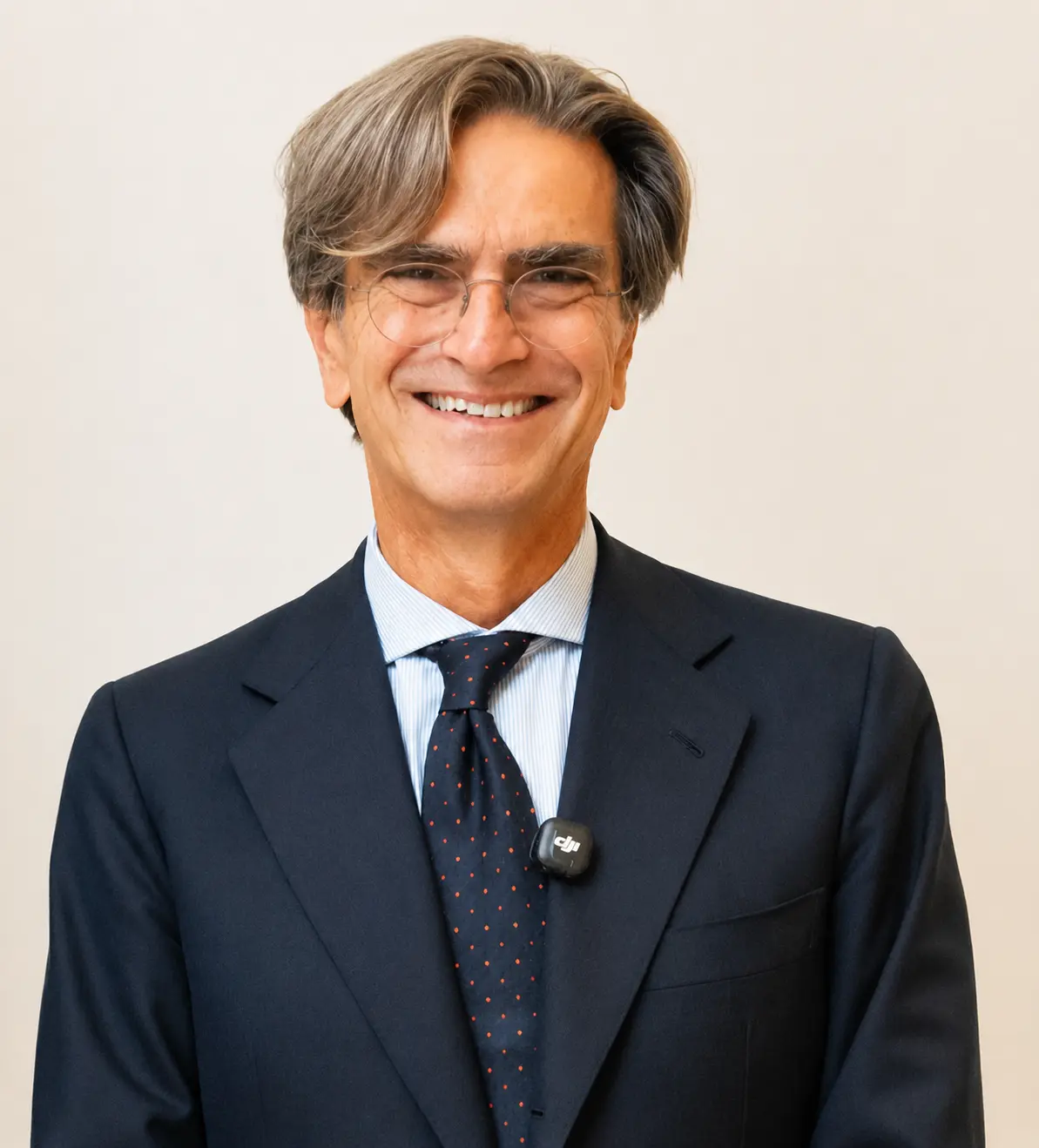
A pragmatic attitude to evaluate the impact of new technologies, without exalting them but not demonizing them a priori. And above all the need to learn to know them to protect the most vulnerable. Giorgio Gosetti, work sociologist at the University of Verona, explained why educating critically about new technologies is the best method to avoid being overwhelmed by them. Because even in an increasingly virtual and interconnected world it is possible to promote a sense of community.Prof. Gosetti, is digitalization influencing interpersonal relationships and face-to-face communication? How?Before our conversation, from my point of view, I think it is necessary to make a brief introduction. Between the category of apocalyptics, who see technology as necessarily a negative event and which will cause a decline in employment, an impoverishment of work and social problems, and the integrated, i.e. those who see technology as a resource for changing society, for generating a social palingenesis, in fact a positive change, I would like to place myself among the "critical pragmatists".What does this approach consist of?It consists of being attentive to the positive and negative implications of new technologies. In fact, we still have many margins of uncertainty regarding new technologies. We still do not know well what the components are, their specificities, the potential lines of evolution and the consequences. Therefore a scenario opens up in relation to which we must be attentive, have a critical attitude, but also a desire to try to strategically use the potential of new technologies. In a certain way, Covid has put us to the test, forcing us to experiment with new technologies and relational methods. At least for many of us. It has promoted physical distancing, but I wouldn't necessarily say social distancing. It has certainly influenced the way we relate, making people like me who are used to face-to-face interactions and who definitely don't intend to abandon them strongly question themselves. But digital technologies have now entered relational systems, and are part of the social dimension of relationships. In summary, we do not demonize nor exalt the technologies that now cross our relationships, but let us look at ourselves critically.
How can we foster a sense of community in an increasingly virtual and interconnected world?Difficult question. Decidedly. Sociologists have often contrasted the community with the differentiated, formalized, fragmented society. That vital world, full of face-to-face relationships, of a profound sense of being together, of sharing values. What about virtual communities? Are they real communities? We should first of all understand when they are "sensible", that is, generative and custodians of meaning, of shared values and experiences that bring people together. Some communities were born precisely with digital technologies. And here a great chapter opens, interesting for sociologists: that of generations. Perhaps there is no need to add anything else, but a certain number of people now take it for granted that the community is also built with digital technologies, that connections must also be fueled with technological supports. I myself have intensified relationships with distant people who I see through video calls. Once upon a time it was more difficult. I feel closer to them, I would say that we have built a community. But ours is a community of meaning, which recognizes itself and also refers to other moments beyond video calls, moments that we feel are ours. So we are experimenting with an integration between old and new ways of understanding community. Who are united by the sharing of meaning.Are there risks of social isolation due to excessive use of technology?Definitely yes. I have been studying the world of work for years and even recently we have more and more evidence that new organizational forms of work (think of smart working) can generate a danger of isolation. Research tells us that if workers see some organizational solutions that are more capable of promoting work-life conciliation, on the other hand they see a danger of isolation, linked to the loss of direct relationships, of sharing, of important moments of fun and important moments of solidarity at work that can only be practicable with direct presence. The dilution of the boundaries between work and life has been underway for some time and especially for some jobs this is now a distinctive feature of the organizational model. This generates positive effects on some aspects of conciliation, but at the same time also negative effects due to intrusiveness and isolation. I think that the moment of sharing at work is fundamental, to create pleasant working conditions and also to generate resources to help people. But also to learn from shared experiences.
How do you imagine social relations will be in the context of Society 5.0 in twenty years?It's difficult to make predictions. Perhaps others are better in the field of futurology than sociologists. Social relationships are and will be redesigned by technology and the integration between various relational methods will now be an established fact. We will discover or perhaps rediscover direct contact. How do we explain the thousands of young people who, under the infernal heat of these hours, travel for a concert and spend thousands of them inside a stadium for hours? Certainly to be able to say “I was part of an event,” but also to say “we were part of an event”. Makes sense to them. I imagine a society with many contacts, facilitated by technologies, but also a commitment to transforming them into relationships.What steps can we take today to ensure that future generations live in a cohesive and supportive society?We should deal with the translation of contacts into relationships and therefore primarily with "technological education" (perhaps also dedicating a few hours to civic education and education in being together respectfully). Certainly also defining rules that protect people from technological distortions (control over lives, exclusion from social processes, forced inclusion in other processes, etc.). We should educate in a critical approach to technologies, to understand the potential with respect to a plan of self-determination of the person (which, as regards work, refers us to organizational models and the possibilities of quality of working life, to be my "objects" of study). Cohesion and solidarity, just like inequalities, do not arise out of nowhere, they are a social product of individual and collective choices. Training is a way to go, but also the strengthening of rights to protect people.
We increase your company's long-term value
Discover our consulting services