
How managerial skills are changing in the AI era
With Artificial Intelligence, companies are called to review their organizational models.The success of the transition, however, depends on the ability to enhance human intelligence.
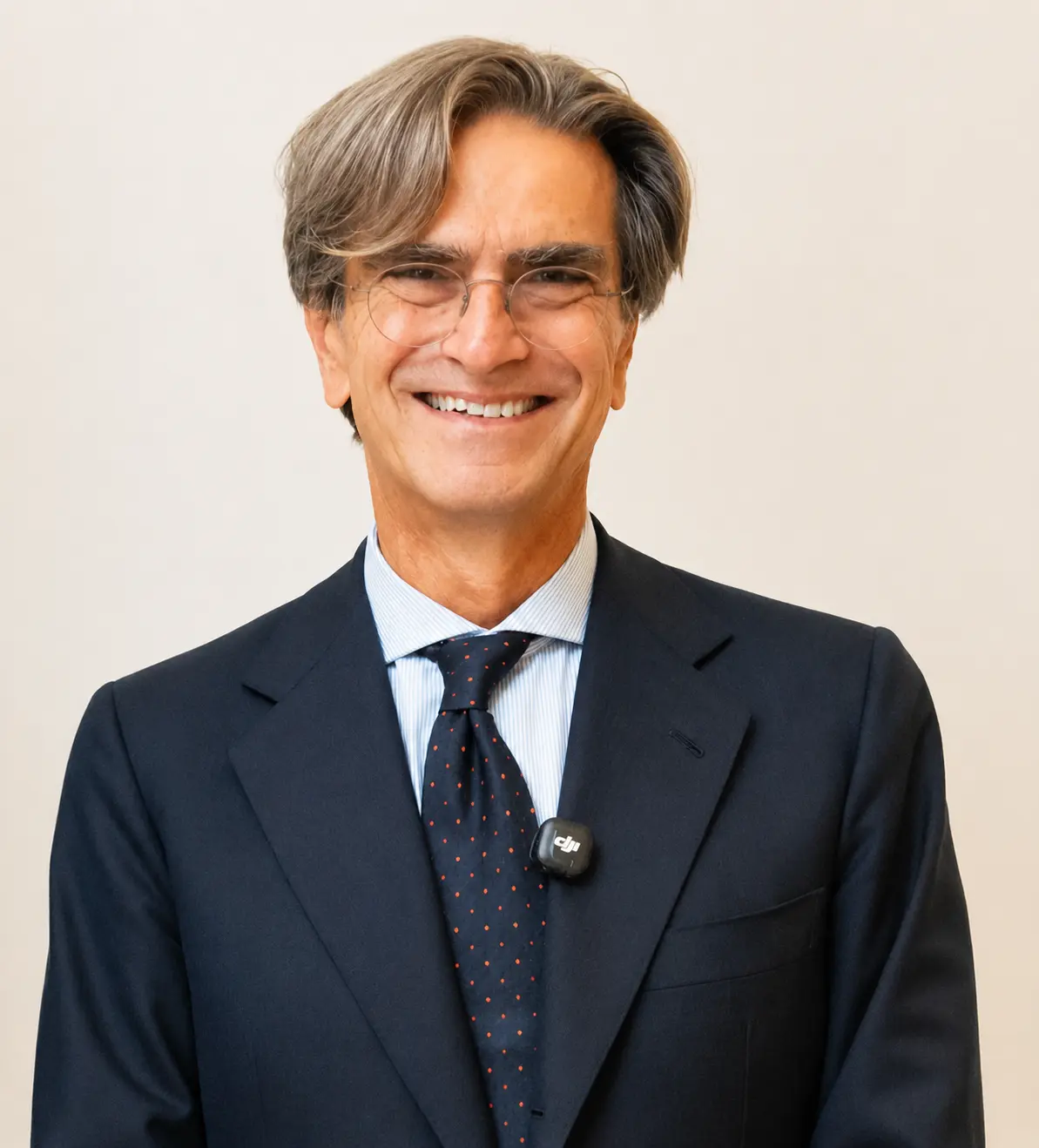
Giuseppe Torre, Professor of Artificial Intelligence, ethics and governance at the Pontifical Antonianum University
For almost a decade, Artificial Intelligence (AI) has discreetly pervaded our lives, above all due to the progress achieved by data science, Deep learning algorithms and the computing capacity of supercomputers. Every day we use, often without realizing it, recommendation algorithms on social media, anti-spam filters, virtual assistants, navigation systems, photo filters and automatic content generation systems. All services based on an impressive and continuous data collection activity.
But the real revolution began on March 15, 2016, when AlphaGo, a software for the Go board game developed by Google DeepMind, beat one of the best players in the world; 'Move 37' may have marked the beginning of a new era not only technological, but social and economic.
Another fundamental stage in this new course of humanity began on November 30, 2022, when Sam Altman (CEO of OpenAI) posted on the then Twitter: "Today we launched ChatGpt. Try talking with it here: chat.openai.com". A few days later, on December 5, Altman announced that he had exceeded one million users; today ChatGpt is used monthly by 3.5 billion people, with an increase of 116% in one year (Carr, 2024), in 152 countries, to which must be added Perplexity (90 million visits), Claude (84 million visits) and Gemini (292 million visits), all growing at triple digits. It is the most impressive and rapid mass phenomenon in history and is the beginning of a new era, in which human-machine interaction becomes increasingly pervasive and daily.
Even if the deafening noise produced by the hype drowns out a calm and accurate reflection on the implications of these technologies for humanity, the idea that the appearance of the latest generation AI could produce effects comparable to the encounter between our civilization and an extraterrestrial civilization is increasingly widespread. These systems, in fact, are significantly distant from human intelligence, because although they act, in many areas, in a way that is indistinguishable from us, they base their functioning on a combination of probabilistic algorithms, enormous quantities of data and silicon cards, combinations that, by the inventors of these systems' own admission, we have not yet fully understood.
We are still quite confused and disoriented by this rapid unfolding of disruptive innovations and on the horizon we can already glimpse systems with capabilities that go beyond even the most extreme science fiction. Without having to wait for Artificial General Intelligence (Agi) systems, our analysis of the technological landscape shows that the models called "agentic AI" already represent a reality and are characterized by the ability to operate with minimal human supervision and to constantly self-improve through learning.
These systems are evolving into even more sophisticated forms: the first exploits the so-called "swarm intelligence", which allows AI agents to operate in a coordinated and collective way to achieve common objectives (Strobel, Pacheco and Dorigo, 2023); the second is based on "Generative Physical Artificial Intelligence", which allows robotic systems to train on real-world experience.
Swarms of intelligent agents have the ability to dynamically adapt to the external environment and, at the same time, demonstrate high intrinsic resilience. These characteristics, combined with latest generation algorithms (for example, error backpropagation), place these systems at the border between science and technology and open the way to still unexplored potential in crucial fields, such as climatology, medicine, security and robotics, and in business and management sciences.
Generative Physical Artificial Intelligence will allow robots to perform tasks for which they were not designed and, just as happens today, with linguistic models with texts, images and sounds, the training of robot intelligence will be based on the physical experience that these machines will carry out in daily productive or domestic reality.
AI, from technological tools to co-builder of social reality
Such a rapid progression of disruptive innovations forces us to totally rethink not only the skills of business leaders and much of the workforce, but also forces us to imagine new business models and new organizational paradigms of communities radically different from those we are used to creating and managing. In fact, these new models will have to contemplate the presence, in the company, of machines that use not only an intelligence significantly different from human intelligence, but also based on the concept of swarm intelligence (Dorigo and Stützle, 2004) and Generative Physical Artificial Intelligence.
Although it is too early to have a precise picture of what will happen, some initial indications coming from the analysis of companies that use AI systems in an advanced way lead us to think that these organizations tend to be based increasingly on skills and not on qualifications and are looking for new organizational configurations, both to make the most of the potential of collective intelligence and to better manage the balance between efficiency and resilience.
On the other hand, the concept of efficiency was developed in a rather stable competitive and technological context and is well suited to standardized processes, while that of resilience develops in contexts characterized by instability, complexity, ambiguity, rapidity of changes, which require creativity and a lot of knowledge.
Organisations based on creativity, innovation and skills would seem to be oriented towards rather long time horizons and towards assets that reflect the logiclean, such as, for example: robustness, to absorb crises, shocks and interference from outside; redundancy, to guarantee continuity even when one or more components are rendered unusable; diversity, to face complex challenges with a diversity of elements (such as skills, tools, genres, etc.), sensitivity and knowledge; flexibility and agility, to respond quickly to changes; the integrated approach to quality at every stage of the production process.
The collaborative approach seems to be decisive in these organizations: employees are valued and considered an integral part of the decision-making, creative and improvement process. On the other hand, humanity has progressed precisely thanks to communities/organizations based on collective intelligence (tribes, city-states, empires, national states, corporations, etc.).
Today, the union between human intelligence, the internet and AI could give rise to new forms of collective intelligence, larger and more sophisticated than any other that has ever existed, but these new organizational systems will force us to face completely new ethical questions for which we are still largely unprepared. For example, the ability of AI models to produce 'original' content (or even simply 'recombinations' of human creative content) could put these systems in a position to participate, together with us, in the construction of the organizational infrastructure and to shape the corporate culture, i.e. the 'software' that makes a company work.
The topic of co-evolution of corporate culture is perhaps the most intriguing and controversial topic because it raises questions such as: who controls this co-evolution? How to ensure that this influence is beneficial? How to preserve theagencyhuman in this process? In conclusion, today's reflection on AI should grasp a central point: we are by no means creating simple technological tools, but potential co-actors in the construction of the social, economic and competitive reality. This requires not only technical, but above all philosophical, ethical and anthropological reflection on how to manage this co-evolution, preserving the values andagencyhuman, i.e. the ability to act actively and transformatively in the context in which one is inserted.
The set of skills is a complex structure
Returning to the topic of skills, the reason why it is appropriate to rethink the skills of a large part of the public and private leadership, of the workforce and of educators and trainers lies in the peculiarities of today's AI systems. They are in fact conversational systems, with which it is possible to interact, using natural language, sounds, images and videos, and which make it possible to create applicationslow codeor evenno queues(Lcnc). They can also provide entire services as software solutions (Service as a software) by leveraging the automation and machine learning capabilities of Generative AI (AI Gen) systems. They are within the reach of a large part of humanity, who will increasingly use them to optimize purchasing, consumption, production, education and professional training choices, etc. They have effectively broken down language barriers, thanks to their extraordinary translation capabilities into hundreds of different languages. They can solve problems for which the algorithm was not specifically created, distinguishing themselves from all the machines known to date, and have a learning capacity far superior to that of humans, which can further expand thanks to swarm behaviour. They do not limit themselves to automating processes, but have the ability to radically transform them, contribute to managerial decisions and contribute to creative processes to improve existing ones and enable the creation of completely new products and services. Finally, they will soon be able to take the form of intelligent swarms.
In the entrepreneurial field it is clear that these systems are no longer a simple support for production, but that they are progressively acquiring the rank of 'production factor', which contributes together with people, capital and the Earth to creating the foundations on which the company is based.
A growing number of signals (4Manager Observatory) indicate that this new production factor also has the power to shape organizations and requires managerial skills based on new paradigms and not just on a skill mix different from that of the pre-AI era.
Above all, AI invites us to look at the set of skills provided by entrepreneurs, managers and workers to the company and to specific work roles, projects and even professional development paths (ontology of skills), as a complex structure, composed of both individual skills and the relationships that exist between them.
Looking at the organization as a network of interconnected skills, and not as a set of more or less organized qualifications, constitutes a real paradigm shift that could allow organizations to carry out tasks even in fields in which they do not excel, for example, in the field of sustainability, the circular economy, digital technologies, the projection of products and services on unknown markets, etc. The reason why this could happen depends on a particular quality that AI Gen seem to possess: they improve capabilities of people (managers, workers,policy maker, etc.) to carry out tasks in which skills are limited. Think, for example, of knowledge of languages. This could also allow smaller and less structured organizations to increase effectiveness and resilience thanks to a workforce with skills 'augmented' by AI.
AI requires traditional and specialized skills for managerial profiles
These considerations must not make us fall into the trap of what Pope Francis defines as the technocratic paradigm. As stated inLaudate Deum, the increase in human power, also as a result of technology, does not always represent progress for humanity, as demonstrated by the technologies used in the past for destructive purposes, including the use of atomic bombs and the genocide of entire populations. There have been moments in which the euphoria for progress has overshadowed the horror of its consequences, and this risk remains, since technological development has not been accompanied by an equivalent maturation of ethics and human conscience.
The modern manager should therefore develop a triple competence: technical, human and ethical. On a technical level, it must understand the potential and limits of AI. On a human level, he must be able to lead organizational change and manage hybrid human-machine teams. On an ethical level, it must guarantee responsible and sustainable use of technology.
These themes were analyzed through the identification of the associated knowledge and skills (skill intelligence) according to the multilingual European classification of skills, competences and occupations (Esco), thus allowing the identification of the knowledge that accompanies the different managerial figures.
Let's start by saying that AI requires managerial profiles equipped with a mix of traditional and specialist skills useful for understanding its systems, managing complex projects, mastering Data science and possessing strong business and leadership skills. Ethics, risk management, continuous learning and critical thinking are also essential.
As the company size increases, the role of the manager becomes strategic, understood as responsible for the process or parts of the AI development process. In essence, a managerial figure in charge of managing part or all of the AI development program in the company should combine 'classic' managerial skills with a high level of specialization or knowledge in the field of AI. This extremely complex portfolio of knowledge is poorly disseminated and available on the Italian market.
Going into detail, the managerial profiles we have identified can be divided as follows.
High vocation for AI development.Executives and directors of IT services and general managers in IT and telecommunications companies. These profiles concentrate over 55% of the digital skills classified by Esco and digital skills represent just under 60% of the skills required.
Medium-high vocation for AI development.Directors and managers of sales and marketing, procurement and distribution, manufacturing and extraction of minerals, production and distribution of electricity, gas, water, waste management and Research and Development.
Medium-low vocation for AI development.Managers who require a basic digital culture, with a concentration of 9.2% of total digital skills. The group includes directors and managers who work in communications, advertising, public relations; in the trade of goods (excluding motor vehicles and motorcycles); in sporting, recreational and entertainment activities; in human resources management; in the transport and warehousing sector; in agriculture, livestock farming, forestry, hunting, fishing; in accommodation and catering services; in the trade and repair of motor vehicles and motorcycles; in editorial services, film, radio and television production.
Low vocation for AI development.Directors and managers of finance and administration; of services to businesses and people; of construction and, surprisingly, directors and general managers of banks, insurance companies, real estate agencies and financial intermediation who are not required to have structured digital skills (1.0% of total digital skills, with a marginal weight on each profile).
IT security training is also important for managers
Focusing the analysis on managerial profiles with a 'high' and 'medium-high' vocation for AI development, theoccupation, or the specific professions that these profiles carry out in the various economic activities. The objective was to identify the key skills for each profile, also considering the relative volume of activations.
Obviously, the analysis shows a significant concentration of digital skills in IT-related roles, with a progressive diffusion in other managerial areas. Furthermore, the analysis highlights the interconnection between digital skills andgreen, suggesting how AI can promote sustainable development and support the principles of the circular economy.
At this point of the analysis, the 'key skills', a set of basic knowledge and skills that a manager in the private sector should possess to manage AI development processes in the company, have been extrapolated from the Esco archive. The representation obtained shows the most recurring digital skills and knowledge and quantifies the digital skills most frequently mentioned in managerial profiles.
The analysis of managerial skills for AI therefore reveals a complex and stratified panorama. Digital skills complement traditional skills. IT roles are central. A core of shared digital skills emerges, essential for all managers (web data analysis, project management for content development, digital marketing, etc.). The analysis reveals three main clusters of professional profiles, characterized by shared skills. This suggests the need for a differentiated managerial training approach, while maintaining a common knowledge base.
From the analysis of the data, a first important reflection emerges on managerial training in the AI era. The analysis of skills reveals a core of essential knowledge and skills that should form the basis of the preparation of managers oriented towards the development of AI in the company. This 'minimum shared knowledge' includes technical skills such as web data analysis and knowledge of industrial software, but also management skills such as planning digital marketing strategies and managing content development processes. However, the reflection extends further, highlighting that for an effective implementation of AI, including generative AI, managers need training that embraces not only development, but also cybersecurity. This holistic vision of management training proves essential to navigate the complexities of AI integration, balancing innovation and protection of the company's information assets.
The relationship between digital and green skills is fundamental
Further analysis was dedicated to examining the relationship between digital skills and competencesgreen, with the aim of identifying the areas of shared skills and knowledge essential for sustainability plans. In fact, AI skills andgreenare two interconnected and increasingly important areas in today's work landscape, both crucial to addressing the most urgent challenges of our time, such as climate change and digital transformation.
AI skills refer to the ability to develop systems, implement them and use them, while AI skillsgreenrefer to the knowledge and skills needed to address environmental challenges and promote sustainability. AI can, therefore, play a fundamental role in promoting sustainability in several sectors, including: the development of intelligent electricity grids, where it is used to optimize energy distribution and integrate renewable sources; smart building management, where it helps reduce energy consumption in buildings by optimizing lighting, heating and cooling; precision agriculture, in which it optimizes the use of water, fertilizers and pesticides; logistics and transport, with AI that optimizes delivery routes and reduces greenhouse gas emissions; environmental monitoring, in which it is used to monitor the state of the environment and identify potential problems.
Considering, in particular, the development of the circular economy, AI can contribute to: optimizing product design; to intelligent waste management; to the promotion of the products-as-a-service economy; monitoring and raising awareness; to the creation of new business opportunities for companies that adopt circular economy models; to greater transparency; to more informed decisions on the management of materials and waste.
The theme of managerial skills and that of human intelligence (individual and collective) are central in the field of AI, which requires an indissoluble relationship between 'knowledge' and 'know-how'.
Many key knowledge translates directly into practical skills, highlighting the close link between theory and practical application. Importantly, unlike other fields or sectors, AI imposes a significantly higher level of skills and knowledge for all actors involved. Even if the company were to draw AI resources from external suppliers (Artificial Intelligence as a Service) it is more than evident that managers and entrepreneurs must be fully aware of what they are using (which AI model), what characteristics it has, what data it uses and how it uses them to produce the output.
This field, therefore, does not allow approximations or superficial knowledge: the complex and rapidly evolving nature of AI requires a deep and multidisciplinary understanding, as well as the ability to apply this knowledge in a practical and innovative way. In essence, in the context of AI it is not possible to 'cheat' or rely on approximate skills; human intelligence and authentic mastery of knowledge and skills become an essential requirement to operate effectively in this sector.
Italian companies see several obstacles in the development of AI
The study carried out by the 4Manager Observatory also indicates the obstacles to the development of AI in our country. The lack of skills is in fact experienced as an obstacle by more than one company in two (55%), in addition to excessively high costs (49.6%), indicated by one company in two in the construction sector, with higher values in small companies and in the geographical areas of Central and Southern Italy. The unavailability or quality of the data necessary for the use of AI technologies, however, represents an obstacle for 45.5% of companies, as does incompatibility with existing equipment, software or systems, reported in 40% of cases. Regulatory risk and lack of clarity on legal consequences are seen as an obstacle by four in 10 businesses, while concerns about data protection and privacy breaches are reported by 37% of businesses. Finally, ethical considerations are indicated as an obstacle by one in four companies (26%).
In most of the companies consulted by the study, the adoption of AI goes beyond simple technological updating, involving the entire company structure. Corporate reorganization is a crucial aspect, which includes managing changes, transforming communication flows and overcoming internal resistance. External collaborations take on a strategic role, manifesting themselves through research projects, training and consultancy activities and targeted partnerships. The approach to data is therefore fundamental, with a focus on governance, the implementation of machine learning and the adoption of decentralized AI. Finding specialized AI figures represents one of the most significant challenges, given the scarcity of qualified professionals. Managerial figures play a central role, with particular attention to their role and skills, leadership in innovation and continuous training. Leadership plays a crucial role as it facilitates the integration of AI into daily operations and is also instrumental in its overall adoption and addressing the necessary organizational changes.
The quality of training is another key factor for the adoption of AI. Training not only increases technical competence, but also facilitates the integration of change, reducing resistance and improving adaptation to the new working environment.
Human intelligence remains the success factor
The success of the transition towards AI at the service of humanity requires an integrated approach that starts from investment in people. Training and development of digital skills,greenand ethics must become a strategic priority. Support for innovation must materialize through the strengthening of technology transfer and the simplification of access to financing, but also by fueling the debate on the transparency and democratization of this technology. Particular attention must be paid to governance, with the definition of clear policies and ethical procedures that guarantee the common good.
Cooperation between public and private, the development of expertise networks and the promotion ofbest practicesbecome fundamental elements for creating an ecosystem conducive to innovation and fair. The traditional organizational model must evolve towards more flexible and adaptive forms, which enhance people, their well-being and integrate technical and humanistic skills.
Digital transformation driven by AI represents a complex challenge, but also a unique opportunity, especially for people and nations with reduced knowledge capital or, worse, in a deep demographic crisis. The success of this transition will depend on the ability to keep human intelligence at the center as a distinctive and irreplaceable factor in the process of growth and development.
We increase your company's long-term value
Discover our consulting services